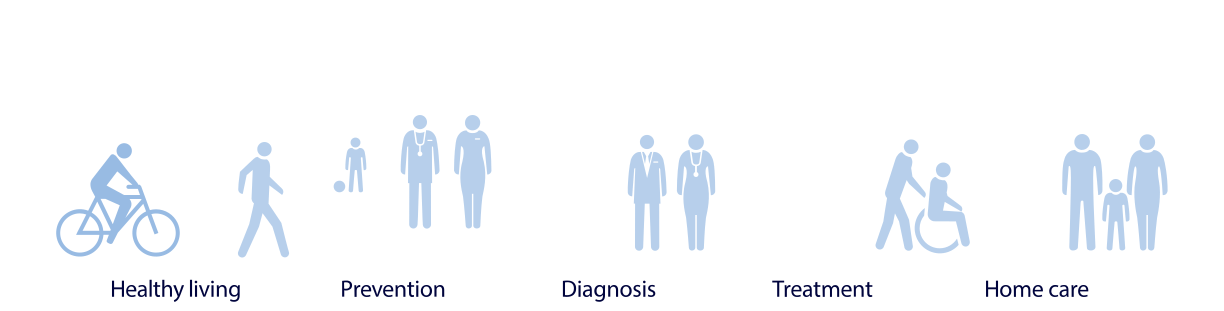
Philips’s unlocks the power of care–virtually anywhere–for patients and providers through
our smart, comprehensive and connected monitoring and diagnostic solutions and services across the continuum. Now you can efficiently transform workflows to diagnose and manage patient populations proactively and deliver care in the right setting at the right time.
Philips solutions across care pathways
These solutions aim to connect information, technologies and people across both the stroke and cardiac care pathways, enabling care teams to work quickly and act decisively to provide the best patient treatment.
Heart care. Everywhere.
Philips ECG solutions—from screening, diagnostic and patient management solutions to cardiac ambulatory monitoring and implantable device monitoring—enables a new standard of cardiac care across the continuum by connecting home to hospital and hospital to home.
Case study: Erlanger Health System
Powered by its unique SmartDetectAI algorithm, MCOT accelerates delivery of clinically smart cardiac care with high-quality actionable reports that enable you to diagnose and treat arrhythmias quickly and confidently.
Our remote monitoring technology has helped us build the world’s largest cardiac data network, making care more accurate, comprehensive and efficient.
1M
Monitoring over 1 Million patients per year
33 K
Physicians
Order per Month
$300 M
Over $300 million invested in the technology and service platform
50 K
Over 50,000 monitoring devices – 29 U.S. patents and 34 international patents issued
4 Billion
Processing over 4 billion heartbeats a day
Philips ECG Solutions
Philips in-hospital Diagnostic Cardiology Solutions and Cardiac Ambulatory Monitoring work together to help you watch over your patients – from home to hospital –and hospital to home.
Combination of leading positions of Philips and BioTelemetry in hospital and home will result in #1 patient care management ecosystem
Philips works with Giving it Back to Kids, a non-profit organization in Southeast Asia that provides life-saving surgeries and medical care for children with heart disease